



















Are your marketing automation tools failing to deliver the predictable pipeline your board demands? Many senior leaders struggle to see a clear return, often blaming the technology itself. However, the real barrier to MarTech ROI isn’t usually the platform – it is the underlying capability of your people, processes, and data.
The Shift from Activity to Impact
The modern marketing landscape has fundamentally changed. Chief Marketing Officers (CMOs) are no longer judged solely on engagement; 81% of CMOs are now expected to deliver direct revenue or pipeline growth. Despite this, many teams remain trapped in an “activity loop,” focusing on vanity metrics like email sends or click-through rates rather than business outcomes. AI has raised the stakes, with boards demanding more efficiency and higher results with the same or fewer resources.
Common Pitfalls in MarTech Strategy
A frequent mistake organizations make is assuming that new technology will fix broken workflows. When performance stalls, the conversation often incorrectly starts with “the platform isn’t doing what we need”. In reality, the failure typically occurs upstream:
- Inconsistent Workflows: Applying new tech to processes that don’t work.
- Data Gaps: Using “garbage” data and expecting high-quality results.
- Skill Gaps: Expecting teams without specific automation expertise to design complex, automated customer journeys.
The Solution: The Revenue Acceleration Loop
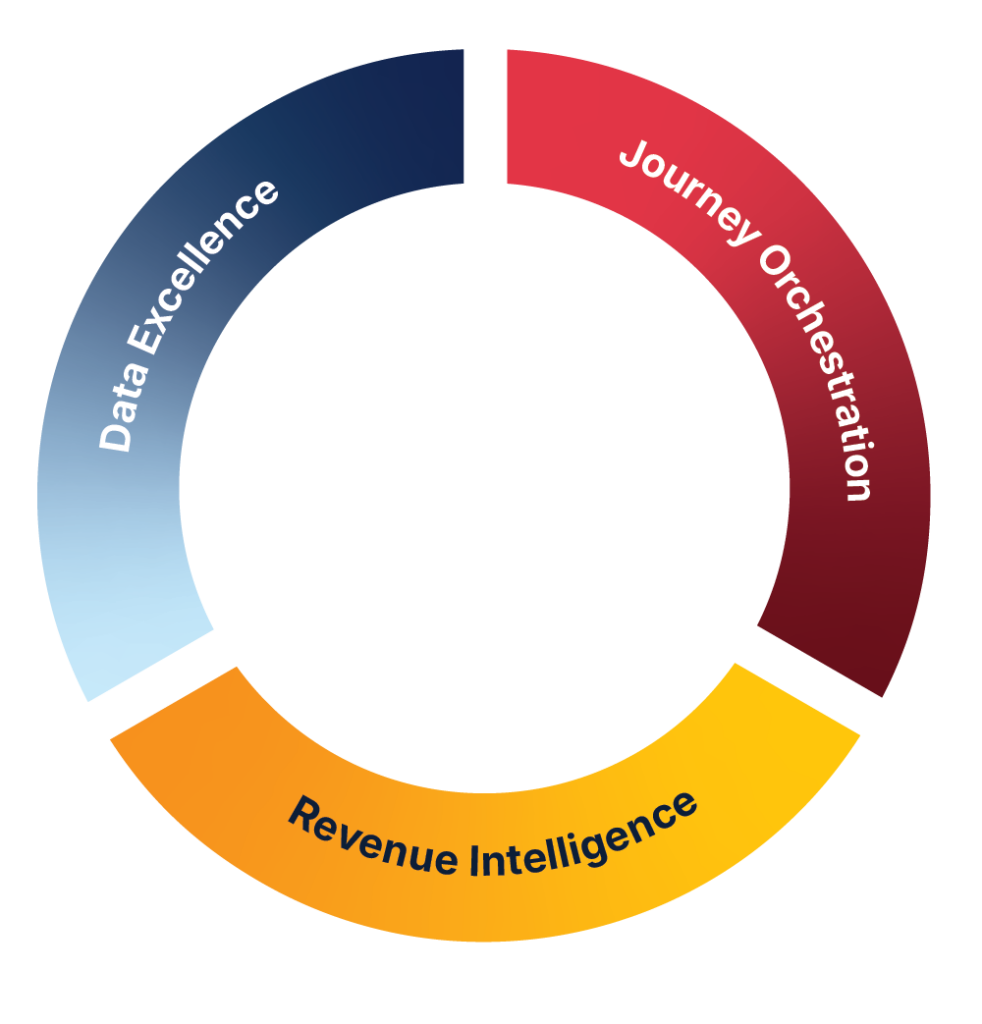
To break the cycle of stalled ROI, JTF utilizes our three-part methodology called the Revenue Acceleration Loop:
- Data Excellence: Building a foundation of clean, compliant, and unified data.
- Journey Orchestration: Delivering the right message at the right time across the entire Adobe ecosystem.
- Revenue Intelligence: Turning engagement into action by sharing contextual insights that help sales teams prioritize and perform.
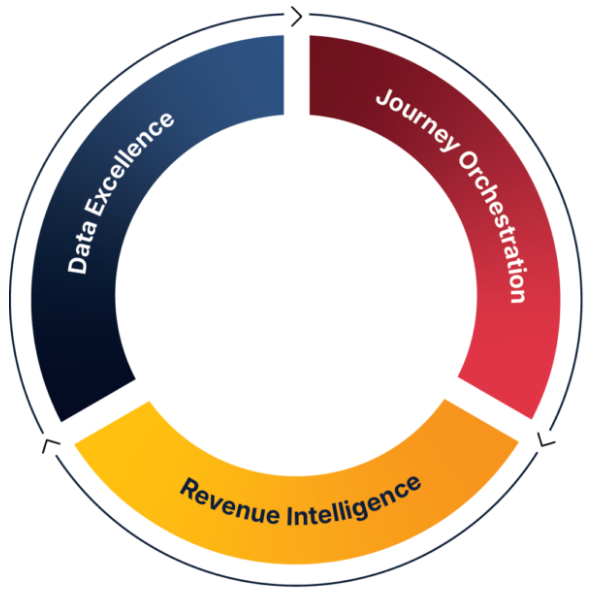
JTF Revenue Acceleration Loop
Is Your MarTech Stack Driving Revenue – or Just Activity?
Most marketing teams are caught in an activity loop: measuring email sends and click-through rates while the board demands pipeline.
At JTF Marketing, we audit and reconnect your Data Excellence, Journey Orchestration, and Revenue Intelligence layers – turning your marketing engine from a cost center into a predictable growth driver.
Next Steps for Senior Marketers
Start by auditing one critical workflow. Sketch it out on a whiteboard: who does what, how long does it take, and where does consistency get lost?
Once you identify where your operational drag is occurring, you can apply AI specifically to remove that friction, such as automating repetitive manual tasks or enriching lead data for sales.
Conclusion
Fixing your MarTech ROI requires looking past the feature depth of your tools and focusing on operational reliability. By aligning your people and processes within a systematic framework, you move marketing from a cost center to a predictable growth driver.
Frequently Asked Questions
Platform changes rarely fix ROI problems on their own. The root cause is usually inconsistent workflows, poor-quality data, or a lack of automation expertise on the team. Auditing your people and processes before your technology typically delivers faster results.
The Revenue Acceleration Loop is a three-part framework covering Data Excellence (clean, unified data), Journey Orchestration (right message at the right time), and Revenue Intelligence (turning engagement into actionable sales insights).
Move away from vanity metrics like email sends and click-through rates. Instead, tie your marketing automation activity directly to pipeline created, revenue influenced, and sales cycle length. Connecting your MarTech data to CRM outcomes gives you a clear ROI picture.
The three biggest culprits are inconsistent workflows (new tech applied to broken processes), data gaps (low-quality or incomplete contact data), and skill gaps (teams without the expertise to design and manage complex automated journeys).
Start by auditing one critical workflow. Map out who does what, how long each step takes, and where consistency breaks down. Once you locate the bottleneck, apply AI or automation specifically to remove that friction rather than overhauling the entire stack.