



















Marketing teams have never lacked customer intelligence. In this article, we’ll explore how AI Lead Follow-Up Marketo solutions can help bridge the gap between data and real engagement.
Modern marketing automation platforms capture extraordinary levels of behavioral insight. Every campaign response, webinar registration, content download, and website visit adds another signal to the growing picture of a prospect’s interests.
Platforms such as Adobe Marketo Engage track these interactions across channels, building detailed engagement histories that marketers rely on to score leads and trigger nurture campaigns.
The irony is that while marketing has become exceptionally good at capturing engagement, it rarely possesses the tools to explain that engagement to sales.
Sales teams do not need activity logs.
They need context.
Without it, even the most engaged leads can appear indistinguishable from casual researchers. The result is the familiar tension between marketing and sales: marketing believes it has delivered qualified leads, while sales questions their quality.
The problem is not engagement. It’s an interpretation.
Marketing captures the signals. sales needs the story.
Marketing automation platforms generate huge volumes of behavioral data:
- product page visits
- whitepaper downloads
- webinar attendance
- pricing page views
- repeated research across specific solution areas
Marketing teams use this information to calculate lead scores, attempting to represent buying intent through numerical weighting.
A webinar might add ten points. A pricing page visit might add fifteen. But numbers don’t tell a story.
Why lead scores fail to tell the story
When a lead becomes an MQL, sales typically receives:
- a score
- a list of activities
- and a notification to follow up
This leaves the sales rep to reconstruct the narrative themselves. They have to ask:
What is this person actually interested in?
What problem are they trying to solve?
Which product or service are they evaluating?
The impact on MQL to SQL conversion
Without clear answers, follow-up becomes inconsistent. Some leads are ignored. Others receive generic outreach. Many go cold while sales tries to determine whether they are worth pursuing.
The result is a breakdown in the MQL to SQL transition, the point in the funnel where marketing engagement should become revenue opportunity.

The hidden bottleneck in the funnel
Most organizations focus heavily on the top of the funnel. They invest in:
- demand generation campaigns
- content marketing
- paid media
- webinars and events
- nurture programs
These activities drive engagement successfully. Marketing teams often generate hundreds or thousands of positive interactions every month. But the conversion point between marketing qualification and sales engagement remains poorly optimized, and this is where revenue is frequently lost.
Leads may show clear buying signals, but if the follow-up is delayed or poorly targeted, that interest fades quickly. Manual follow-up processes simply do not scale with modern digital engagement volumes, and this is where AI begins to change the equation.
Introducing the demand accelerators
JTF has developed two solutions to address this exact gap between marketing engagement and sales conversion.
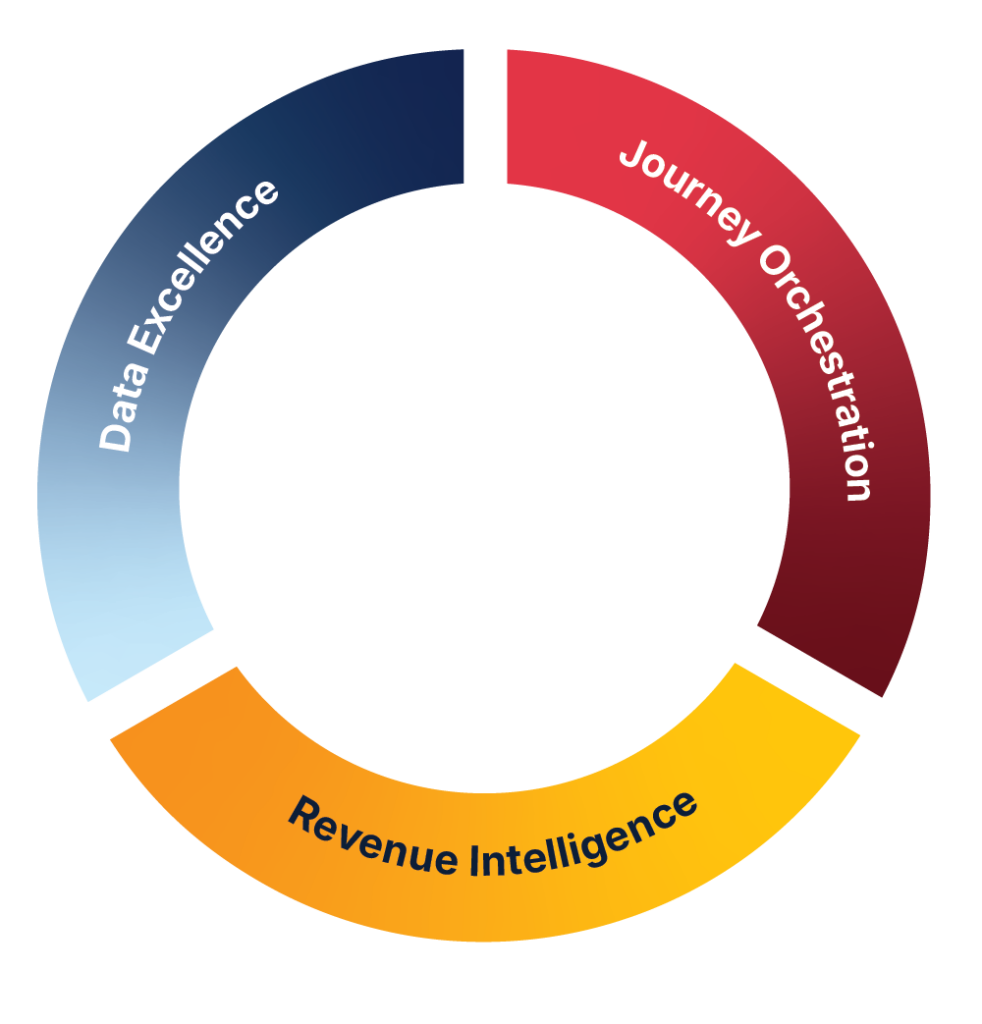
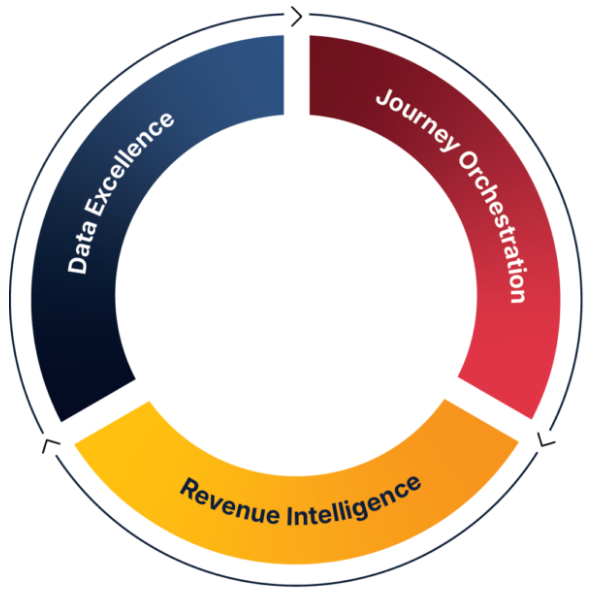
The approach combines two capabilities that operate directly within the marketing engagement ecosystem:
Together they transform marketing activity into actionable sales intelligence and contextual outreach, ensuring that engaged prospects receive meaningful follow-up while sales gains clear visibility into what each prospect cares about.
AI engagement summaries: turning activity logs into sales intelligence
AI Engagement Summaries analyze behavioral signals captured across marketing touchpoints and convert them into a clear narrative. Instead of showing a sales rep a list of disconnected activities, the AI produces a summary describing:
- The themes the prospect explored
- Which products or services appear most relevant
- The content that attracted the strongest engagement
- How the engagement evolved over time
This transforms raw engagement data into something sales can immediately use.
The key to the summary’s effectiveness is not simply in translating activities into “plain English,” but in the structured process that precedes it. The process maps raw engagement signals (such as a whitepaper download or a solution page visit) to specific topics and assigns a value (e.g., Low, Medium, High).
By enforcing this strong mapping of activity to a relevant topic and a relative value, the AI can generate a summary that is not just narrative, but deeply actionable. This intelligent translation allows Sales to prioritize outreach based on both the what (the topic) and the how much (the value/intensity) of the prospect’s interest.
From data to dialogue
To see this in action, consider how a standard lead notification changes. A notification might no longer read:
“Lead score increased to 85.”
Instead, the AI might summarize:
“Prospect has shown strong engagement with data integration and automation content, including multiple visits to solution pages and a webinar focused on marketing-sales alignment.”
That level of context allows a sales rep to begin a conversation that actually makes sense.
JTF DEMAND ACCELERATORS
Is your marketo ready to turn engagement into sales conversations?
Marketing captures the signals, but sales needs the story. Most organizations lose valuable revenue opportunities at the MQL-to-SQL handoff because sales reps lack clear context to follow up effectively.
We help you deploy AI Engagement Summaries and AI Lead Follow-Up directly within Adobe Marketo Engage. Transform raw behavioral logs into actionable sales intelligence and automated, contextual outreach that keeps your pipeline moving.
Case study: when context alone wasn’t enough
A global SaaS company implemented AI Engagement Summaries to improve their inbound lead handoff to the business development team. Each inbound lead arrived with a contextual summary describing their engagement patterns and areas of interest.
The improvement was immediate. +30% increase in lead-to-opportunity conversion; 18% reduction in the overall length of the sales cycle; and a 20% faster response rate to high-intent signals.
Sales representatives could quickly understand the prospect’s research behavior without reviewing long activity logs, yet the complaints about lead quality did not disappear entirely. BDRs still reported two major issues:
- time spent chasing leads that did not respond
- prospects who showed strong initial engagement but then went quiet
The team realized that context alone did not solve the follow-up challenge. They also needed a way to maintain engagement while prospects continued their research.
AI lead follow-up: extending engagement beyond the MQL
JTF introduced the second component of the AI Demand Accelerator: AI Lead Follow-Up.
Instead of relying solely on manual sales outreach, the system automatically delivered contextual follow-up aligned with each prospect’s engagement themes.
This included:
- personalized follow-up emails triggered by engagement behaviour
- recommended content aligned with the prospect’s interests
- embedded meeting booking capabilities
- continued nurturing if a meeting was not immediately scheduled
The approach introduced a concept known internally as “next-in-line content.”
Rather than sending generic nurture emails, each follow-up delivered content that logically extended the prospect’s previous engagement. If someone explored a specific solution area, the next interaction deepened that topic. If someone attended a webinar, the follow-up shared related material or case studies.The goal is simple: keep the conversation moving forward.
What the data revealed
The results challenged a common assumption about inbound leads. Many prospects did not convert immediately. On average, it took 20 to 30 engagement touchpoints before a meeting was booked with a sales representative.
Without automated contextual follow-up, many of these interactions would never have happened. Prospects would simply have drifted away after their initial engagement.
Instead, AI Lead Follow-Up maintained momentum by continuing the conversation while prospects progressed through their research journey. The system ensured that:
- no engaged lead went untouched
- follow-up remained relevant to each prospect’s interests
- sales conversations began with stronger context
Why the hottest leads always convert anyway
One of the most interesting insights from the deployment was that the hottest leads will always book a call.
Highly motivated prospects tend to schedule meetings regardless of automation. Which means the purpose of AI follow-up is not to replace those conversions. Its real value is preventing the silent majority of engaged prospects from disappearing between marketing engagement and sales outreach.
This is where most revenue opportunities are lost.
AI Lead Follow-Up keeps these prospects engaged until they are ready to speak with sales.
Rethinking lead scoring
Lead scoring has long been the primary mechanism used to determine sales readiness. But scores alone lack the context needed for meaningful conversations. A lead score of 85 tells sales that someone is active. It does not explain what they care about.
When AI Engagement Summaries are combined with scoring, sales receives both signals:
- Lead Score → How engaged they are
- AI Engagement Summary → What they are interested in
This combination allows sales teams to approach conversations with far greater confidence and relevance.
You may not need another sales tool
Many organizations attempt to solve follow-up problems by investing in additional sales engagement platforms. But most of the intelligence required to improve conversion already exists within the marketing automation platform.
Systems like Adobe Marketo Engage already capture:
- behavioral engagement signals
- campaign interactions
- content consumption patterns
- lead scoring data
The missing layer is interpretation and activation. By adding AI Engagement Summaries and AI Lead Follow-Up, marketing automation platforms can extend their role from campaign execution tools to revenue intelligence engines.
Fixing the MQL to SQL gap
The biggest opportunity for many marketing organizations is not generating more leads. Instead, it is improving the conversion of the leads they already have.
Indeed, when engagement signals are interpreted correctly and follow-up happens at the right moment, the transition from marketing qualification to sales conversation becomes significantly smoother.
Instead of debating lead quality, sales receive clear context. Instead of losing prospects during research cycles, marketing maintains engagement. And instead of chasing activity logs, sales begins conversations with insight.
Marketing has always had the intelligence
For years, marketing teams have captured vast amounts of customer engagement data. What they lacked was a way to translate that intelligence into something sales could immediately use.
AI Engagement Summaries provide the narrative. AI Lead Follow-Up keeps the conversation moving.
Together, they turn marketing engagement into sales-ready opportunities. And finally close one of the most persistent gaps in the B2B revenue funnel.
Want to see it for yourself? Book a consultation today
Conclusion
The challenge in B2B lead management is no longer capturing engagement; it’s interpreting and acting on it effectively. By implementing the JTF Demand Accelerators – AI Engagement Summaries and AI Lead Follow-Up – organizations can bridge the persistent gap between marketing qualification and sales conversion. AI Engagement Summaries transform raw activity logs into actionable sales narratives, giving sales teams the context they need to start relevant conversations.
AI Lead Follow-Up ensures that engaged prospects are continually nurtured with “next-in-line content,” maintaining momentum until they are sales-ready. This strategic use of AI turns Marketo Engage from a campaign execution tool into a true revenue intelligence engine, ensuring that no engaged prospect silently drifts away. The result is a smoother, faster, and more scalable MQL to SQL transition.
Take the next step
Stop losing engaged leads to a broken funnel
Ready to see how your raw behavioral data can become actionable sales intelligence? Let’s map out a strategy that works directly within your existing marketing platform.
Book a meeting with one of our consultants to explore how JTF’s Demand Accelerators can align your marketing signals with sales context and make your revenue growth predictable.
Connect with James on LinkedIn.
Frequently Asked Questions
The MQL to SQL gap is the point in the B2B sales funnel where a Marketing Qualified Lead (MQL) fails to convert into a Sales Qualified Lead (SQL) because of inconsistent or poorly contextualized sales follow-up, often due to sales not having a clear understanding of the prospect’s interests.
Traditional lead scoring provides a numerical value (How engaged they are), while AI Engagement Summaries provide a narrative (What they are interested in). Summaries analyze activity logs to identify the prospect’s key themes, relevant products, and engagement intensity, providing actionable context that scores alone cannot offer.
No. AI Lead Follow-Up is designed to maintain engagement and nurture the “silent majority” of prospects who are researching but not yet ready to book a meeting. It ensures that no engaged lead goes untouched and frees up the sales team to focus on high-intent, context-rich conversations.
No. JTF’s Demand Accelerators – AI Engagement Summaries and AI Lead Follow-Up – are designed to work directly within existing marketing automation platforms like Adobe Marketo Engage, using the intelligence already being captured.