


















Experimentation is a leadership choice, not a slogan. Most teams are stuck in “maintenance mode” because they fear disrupting what is already working. To build a true culture of learning, leaders must move beyond “safety” to “permission,” kill low-impact “sacred cows” to free up capacity, and model vulnerability by sharing their own missteps.
Everyone talks about tests and learning. Very few organizations actually live it. In most marketing teams, experimentation has become a slogan – a slide in a strategy deck or a value written on a wall.
But when you look closely, the campaigns running today look remarkably similar to the ones running last year: the same structures, messaging arcs, social posts, and nurture flows.
When performance is acceptable, nothing changes. That isn’t experimentation, it’s maintenance. And maintenance doesn’t build market leaders.
The trap of “acceptable” performance
Over the past decade, marketing has engineered itself into an always on machine. With dashboard refreshing daily and quarterly targets looming, teams are rewarded for delivery, volume and execution at speed.
What doesn’t get rewarded? Challenging the model or questioning what’s already working.
Most teams aren’t afraid to fail; they’re afraid to disrupt something that is performing “well enough.”
- Maintenance is slow decline: if your campaigns haven’t been rebuilt in two years, you aren’t experimenting
- Safety vs permission: culture isn’t built by just telling people it’s safe to fail. It’s built by giving them the permission to act.

Culture is not about failure. It’s about permission.
The market loves to talk about psychological safety. Remove the fear of failure. Encourage risk taking.
Important, yes. But incomplete.
Experimentation culture is not built by telling people it is safe to fail. It is built by giving them permission to act.
My career has largely been built on one philosophy: forgiveness, not permission.This isn’t about being reckless. It’s about calculated courage – thinking through reputational, operational, and revenue implications before taking a bold step.
You move, you measure, and then you refine.
Leadership: modeling vulnerability over infallibility
Culture cascades from behavior, not posters. If leadership pretends to be infallible, the team will play it safe.
- Share missteps: I regularly share my own bad decisions or processes that created friction instead of efficiency. Transparency removes the stigma of failure.
- Stop micromanaging: If you insist on seeing everything before it goes out, you are building compliance, not experimentation.
- Focus on impact, not preference: Feedback should be based on whether an action “moved the needle,” not whether a leader likes a specific shade of blue.
Capacity is the barrier
One of the biggest barriers to experimentation isn’t fear. It’s capacity. Talented marketers spend too much time building—formatting emails, building workflows, and constructing landing pages.
If your best thinkers spend all day on execution, they will never have the space to rebuild the strategy. You must be willing to kill sacred cows. For example, many B2B newsletters are heavy work and low impact. Built to be overly broad and diluted, these formats try to do too much. By simplifying to one campaign, one objective, and one call to action, you create the clarity that drives performance and the space needed for real learning.
Case study: Questioning the pattern
Let me ground this in a real example.
We recently looked at our webinar social posts.
They weren’t failing. Registrations were steady and engagement was acceptable But acceptable is the enemy of exceptional.We stepped back and rebuilt the approach entirely with new creative framing, sharper positioning, different sequencing and stronger hooks.
The result was a 125 percent increase in webinar registrations without spending more or adding new tools. The performance shift was tracked through Oktopost, integrated with Adobe Marketo Engage. The data made the impact undeniable.
This happened because someone had the cultural cover to challenge what was already “working”.
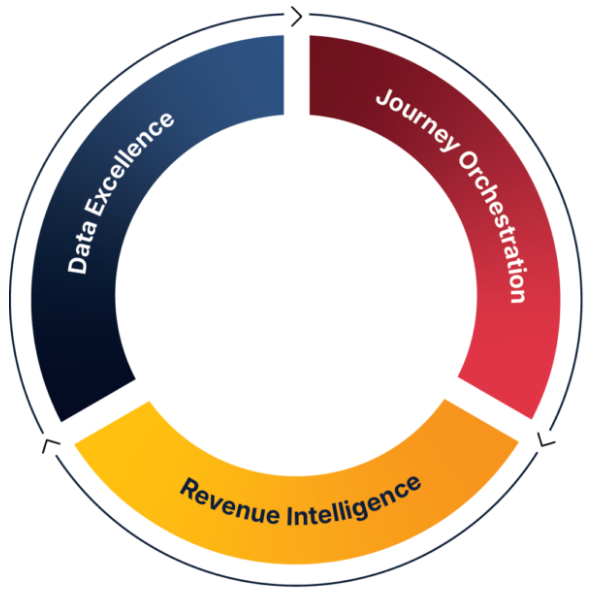
JTF Revenue Acceleration Loop
Is your marketing stuck in maintenance mode?
Acceptable performance is the enemy of exceptional growth. True market leaders don’t just run campaigns—they continuously reinvent them through a culture of calculated experimentation.
As our latest insights reveal, real innovation requires shifting from simple execution to strategic reinvention. Whether you are optimizing your current setup or scaling within the Adobe ecosystem, breaking out of the maintenance trap requires a unified foundation that gives your team the freedom to act.
We help you audit and optimize your Data, Orchestration, and Intelligence layers across Adobe Marketo Engage and AJO B2B, freeing up your best thinkers to drive the high-impact, experimental journeys of tomorrow.
Your mandate for next quarter
Experimentation is a leadership decision. You either reward maintenance or you reward reinvention.If you are a CMO or Marketing Director reading this, next quarter, instead of adding another campaign, I challenge you to:
- Audit the stagnant: Identify what hasn’t changed in 12 months.
- Free your operators: Take one of your strongest people off pure execution and task them with redesigning a “working” system.
- Model the behavior: Share a decision you got wrong to demonstrate that learning is valued more than ego.
Acceptable is the enemy of exceptionalism.
And culture is the difference.
Conclusion
True experimentation is ultimately a leadership choice, not a slogan. To move from acceptable performance to exceptional results, organizations must stop rewarding maintenance and start rewarding reinvention. By freeing up capacity, giving teams the explicit permission to act, and utilizing the right integrated data tools, leadership can turn the anxiety of disruption into a powerful culture of continuous learning.
Connect with James on LinkedIn.
Frequently Asked Questions
Psychological safety removes the fear of failure, but permission gives teams the autonomy and “cultural cover” to actually act, challenge existing models, and disrupt systems that are performing “well enough.”
When talented marketers spend all their time on pure execution (like formatting emails or building workflows), they lack the time and mental space to rebuild strategies. Capacity must be freed up by killing low-impact tasks.
Leaders can model this behavior by regularly sharing their own missteps, ending micromanagement/compliance-driven approvals, and focusing feedback strictly on data impact rather than personal creative preferences.