
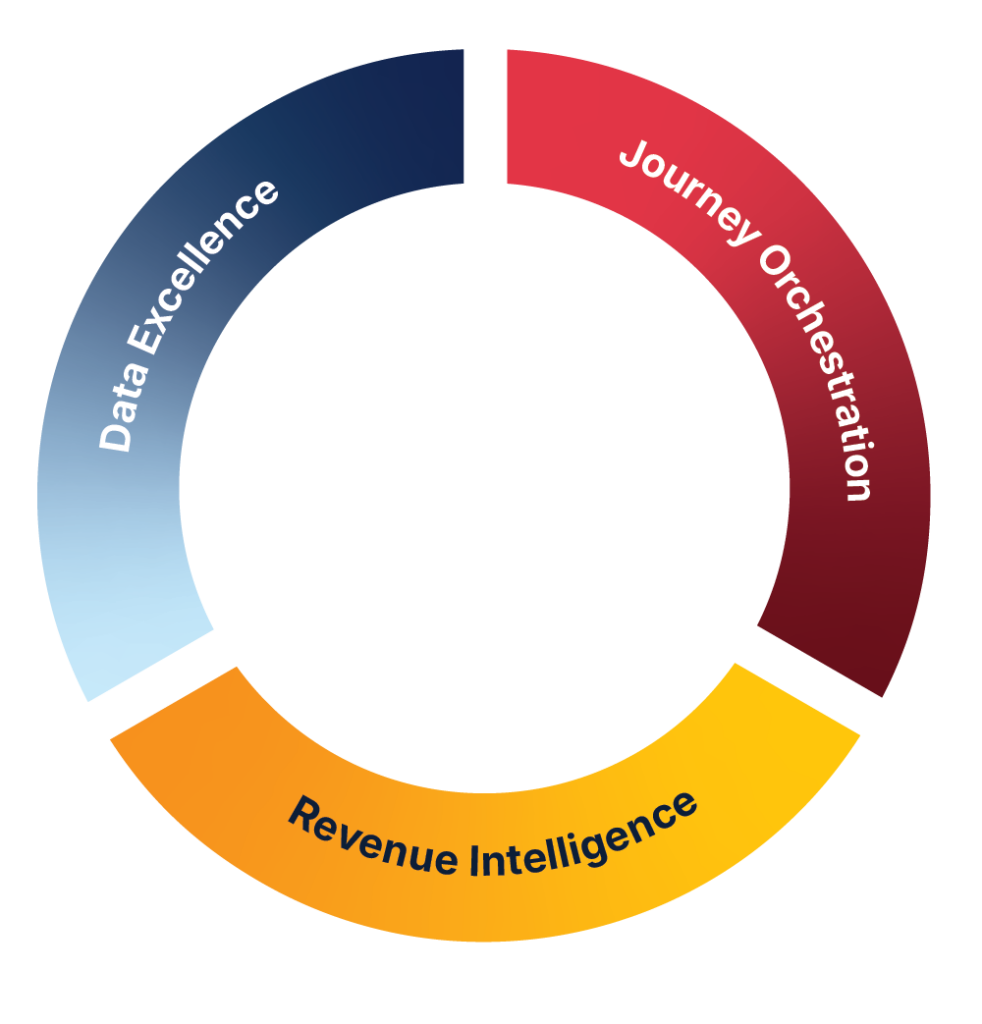



















From Automation Platform to Agentic Operations Layer
Key takeaways: Adobe is repositioning Marketo Engage from a “rules-and-flow” automation tool into an agentic operations layer. By combining native AI agents, Model Context Protocol (MCP) connectivity, and callable agents triggered by Smart Campaigns, Marketo Engage is shifting toward a future where marketing operations are event-driven and agent-assisted rather than just deterministic.
When Adobe talks about AI in Marketo Engage, it is easy to reduce the story to a familiar AI feature headline. Although that may be technically true, it misses the more interesting shift.
What Adobe outlined for Marketo Engage users at Adobe Summit 2026 points to a broader change in how marketing operations work may get done in the future. The story is not just about an updated, colorful interface or a more capable assistant. It is about the combination of native agents, MCP connectivity, and callable agents triggered from Smart Campaigns.
Taken together, those announcements suggest that Marketo Engage is starting to move beyond being only a rules-and-flow automation platform. It is beginning to look like a system that could support agentic operations.
That does not mean the old model disappears. Smart Campaigns, workflows, and deterministic automation will still matter. But it does mean the operating model around them may be changing.
The most useful way to think about this is not “Marketo now has AI”. It’s this:
Marketo is being tooled for an agentic operating model for marketing operations.
Why native orchestration matters
To understand why Adobe’s announcements matter, it helps to put them next to the options marketing operations teams already have.
For years, teams have used tools like:
- Zapier and increasingly Zapier MCP to connect business apps and trigger actions across systems
- n8n to build more flexible, self-hosted or low-code workflow automations
- Workato, Make, and similar orchestration tools for app-to-app processes
- Custom scripts, APIs, and webhooks for the gaps those tools could not easily close
In other words, external orchestration is not new.
The emerging difference is that these external layers are no longer limited to passing data and calling APIs. They are starting to coordinate agents to execute and follow up on data they’re processing.
That matters because agents can take on more ambiguous, context-heavy, operational work than a traditional “if this then that” flow. They can classify, validate, suggest, enrich, investigate, or generate bounded outputs inside a governed process.
What are the key Marketo Engage AI announcements from Adobe Summit 2026?
From the Summit, there are three announcements that matter most in combination.
1. Native agents inside Marketo
Adobe showed a conversational Marketo experience and named a set of operational capabilities around program planning, QA, data normalization, lead investigation, and product knowledge.
That is significant because these are not just content-generation features. They are operational capabilities embedded close to the system of record.
For marketers and MOPS teams, that means the first wave of value is likely to be practical and workflow-oriented including QA and checking programs before launch, setting up structures more quickly, and most time consuming – investigating records and routing issues.
2. The Marketo Engage MCP server
Adobe’s announcement of the Marketo Engage MCP server is important because it places Marketo into the emerging model of tool-aware AI systems. MAPs including HubSpot have or are getting an MCP, so this is nothing new. However, combined with Marketo’s versatile API, adds another layer of agent-friendly access to actions and tools inside of Marketo. The MCP is also agnostic to LLMs, platforms or labs you are using (or planning on using) such as:
- Claude or Copilot-style assistants
- OpenClaw-style orchestration systems
- Internal AI copilots
- Workflow layers that increasingly understand tools and actions rather than just webhooks and REST calls
In practical terms, it means Marketo Engage can become more than a destination system. It can become a governed toolset that external agent systems can work with.
3. Callable agents triggered from Smart Campaigns
This is the announcement I think most Marketo Engage platform owners should pay the closest attention to.
Adobe described a model where callable agents can be triggered from existing workflows such as Smart Campaigns.
That may sound like a small technical detail, but it changes the architecture.
If Smart Campaigns can invoke callable agent actions, they stop being only flow logic, they become event listeners, control points, guardrails and decision gateways for agent execution. This is something similar to the routing or guardrails you see in platforms like n8n.
This gives the Smart Campaign a serious upgrade. More than the one it got with Self Service Flow Steps. The callable agent turns the story from “AI inside Marketo” into something much more operationally important.
Smart Campaigns become the event and policy layer for agent execution.
For example: the Smart Campaign has the controlling trigger to run an agent when:
- a lead hits a lifecycle threshold
- a field changes in a meaningful way
- an operational condition is met
- a campaign status reaches a controlled point
How will Agentic Operations change the role of MOPs leaders?
First, it changes where operational leverage comes from. Historically, MOPS leverage came from building more logic, more carefully, in more places.
The emerging model may shift that towards:
- designing better event triggers
- defining clearer governance boundaries
- using agents for bounded judgement-heavy tasks
- orchestrating across systems rather than only within one platform
Secondly it means MOPs leaders can focus on better design and governance. As soon as agents can act, not just recommend, governance becomes a first-class design issue.
That means teams will need stronger clarity around:
- which actions are safe to automate
- which actions require approval
- how policies are defined and reused
- how work is logged and audited
This is one reason I think the most mature teams will move carefully, even if the direction is exciting.
Finally, it rewards teams that think architecturally. The future is unlikely to belong to teams asking “which AI feature should we turn on first?”
It is more likely to belong to teams asking:
- where should this work start?
- what system should coordinate it?
- where should it execute?
- what should trigger it?
- what needs a human in the loop?

Download
Don’t Build Your Agentic Strategy in a Vacuum
Transitioning to an agentic operating model requires more than just new tools; it requires a strategic re-mapping of your B2B execution.
Use our comprehensive guide to ensure your lead-to-account logic and orchestration flows are optimized for a future where AI agents and human insight work in tandem.
Will AI agents replace traditional marketing automation?
Marketo Engage is not becoming a replacement for orchestration platforms. And orchestration platforms are not becoming a replacement for Marketo Engage.
Instead, Marketo Engage is becoming more important because it can now participate in multiple layers of an agentic operating model:
- as a native execution platform
- as a governed toolset exposed through MCP
- as an event engine that can trigger callable agents
The Adobe announcements are interesting not because they prove a complete future has arrived. They are interesting because they show the shape of where things may be going.
For years, marketing operations teams have had one dominant model: build deterministic workflows, integrate systems where possible, and ask humans to absorb “doing more with less”.
The next model may look different with native Marketo agents and Smart Campaign-triggered callable agents inside the platform itself. When that happens, the role of MOPS becomes less about maintaining automation, and more about designing a governed operating system for execution.
They suggest a future in which marketing operations become more event-driven, more agent-assisted, and more intentionally orchestrated across the whole stack.
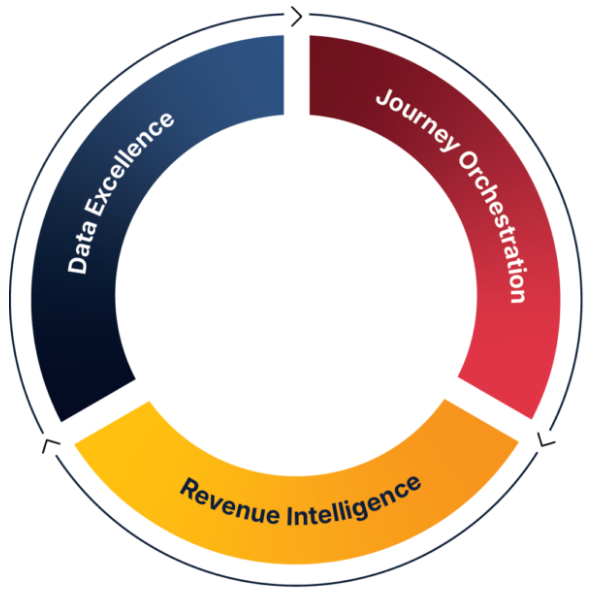
JTF Revenue Acceleration Loop
Is Your Stack Ready for Agentic Operations?
Don’t let legacy automation hold back your 2026 growth. The shift from deterministic workflows to an agentic model requires more than just “turning on AI” – it requires a fundamental shift in your operational architecture.
We help you audit and evolve your Data, Orchestration, and Intelligence layers for the agentic era, ensuring your Adobe Marketo Engage instance is built to govern, trigger, and scale with high-velocity AI agents.
Conclusion: From Deterministic Workflows to Agentic Orchestration
The Adobe Summit 2026 announcements mark a turning point for the marketing operations profession. We are moving away from the “rules-and-flow” era, where MOPs leverage was built through manual logic, into a new chapter of Marketo agentic operations. This shift isn’t about replacing the core strengths of Marketo Engage; it is about augmenting them with native agents, MCP connectivity, and the event-driven power of callable Smart Campaigns.
Embracing this model is a proactive step toward a more scalable, intelligent revenue engine. By viewing Marketo as a governed operations layer rather than just an automation tool, you enable your team to focus on high-value architectural design and rigorous governance. The future of B2B marketing won’t be won by those who simply automate faster, but by those who build a sophisticated, agent-assisted operating system that can handle the complexity of the modern buyer’s journey. Ensure your stack is ready to move beyond “if-this-then-that” and into the era of intentional execution.
Take the next step
Don’t just maintain automation – design the future of execution
As Marketo Engage moves toward an event-driven, agent-assisted model, governance and design are your new competitive advantages.
Contact us today to help your team transition to a governed agentic operating system.
Connect with Charlie on LinkedIn.
Frequently Asked Questions
The agentic operating model is a shift where Marketo Engage moves beyond simple “if-this-then-that” rules to a system that coordinates AI agents. These agents can handle ambiguous, context-heavy tasks like lead investigation, data normalization, and QA.
Callable agents allow existing Smart Campaigns to act as event listeners and guardrails. Instead of just executing a fixed flow, a Smart Campaign can trigger an AI agent to perform a task when a specific lifecycle threshold or operational condition is met.
The Model Context Protocol (MCP) server makes Marketo a “tool-aware” system. It allows external AI systems (like Claude or internal copilots) to interact with Marketo as a governed toolset rather than just a destination for data.
No. Traditional Smart Campaigns and deterministic workflows will remain essential as the “event and policy layer”. The role of Smart Campaigns is evolving to provide the necessary governance and triggers for where and when agents should execute.
Marketing Operations (MOPs) leaders will shift from building manual logic to designing event triggers, defining governance boundaries, and orchestrating work across the entire tech stack. Focus will move toward deciding which actions require human approval and how automated work is audited.